STEM 4: Code Practice Oscillator

$0.00
Sold Out

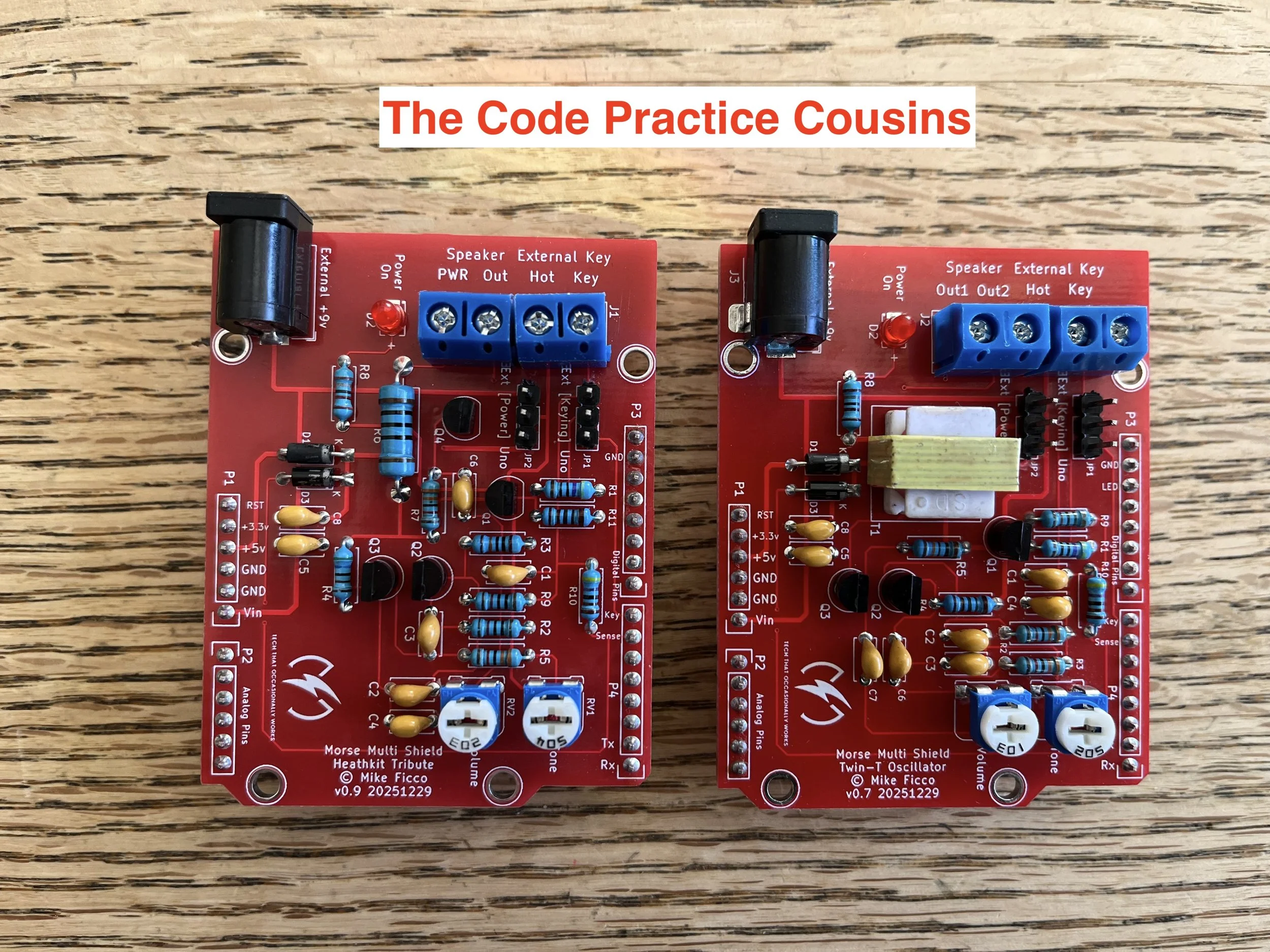
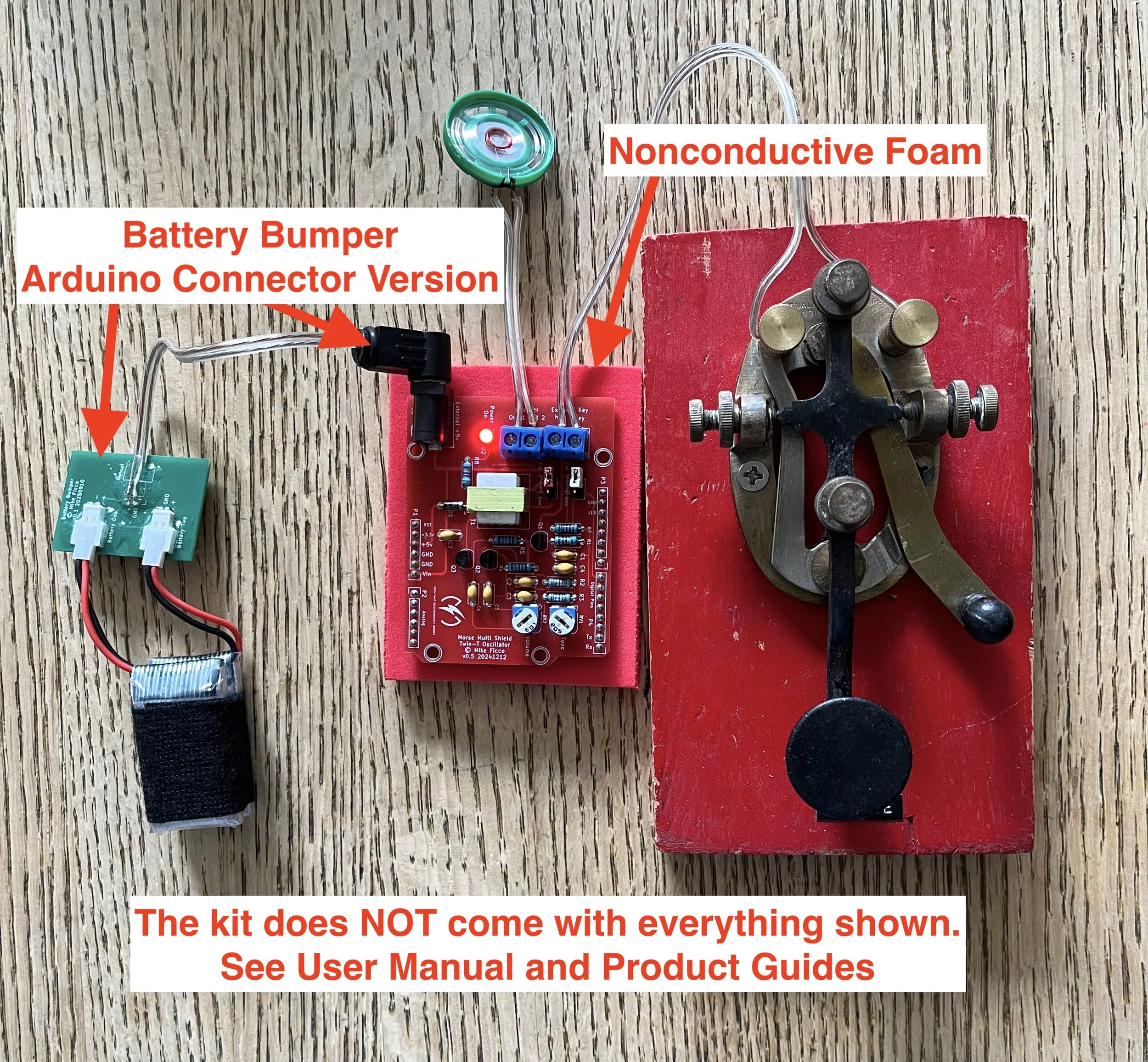
I have two Morse Multi Shield Super STEM Kits. A Super STEM Kit is both instructive and actually useful. Both are "Code Practice Oscillators" - used by those who want to learn Morse Code (or just build a cool kit). These Arduino Uno Shields have onboard oscillators that can be triggered either by an external key or in software from an Arduino Sketch. They do NOT require an Arduino to practice Morse Code.

The first, the "Heathkit Tribute" Morse Multi Shield, honors the venerable Heathkit HD-1416. It has been updated with (somewhat) more modern components and converted to use Arduino or human keying at either 5 or 9 volt operation. This Shield uses an Astable Multivibrator as the oscillator to produce a square wave tone.

The second, my "Twin-T Oscillator" Morse Multi Shield, also uses Arduino or human keying at either 5 or 9 volts. However, this Shield uses a "Twin-T" resistor/capacitor network to produce a sine wave tone - which some say is a more pleasing sound than the square wave produced by the Astable Multivibrator.

These Kits Are Coming Soon!

Not only can you practice your Morse Code, but when an Arduino Uno is attached you can play Morse Code messages stored in the Arduino memory. AND the playback can be at the precise speed of your choosing. The Morse Code standard defines a DIT as one unit of time and a DAH as three units of time. A unit of time has historically been taken to be the equivalent of sending the word "PARIS" 12 times in a minute.  That equates to a DIT time of about 0.12 seconds, so that is the Sketch default. However, you can change this playback time across a wide range. The Morse playback timing of DITs, DAHs, and gaps is determined by precise interrupts generated by Arduino Timer 1.